What an inspection is really for
We are answering three questions. Which rodent is it, roughly how many are there, and where are they getting in? The first two decide how we trap. The third decides whether the problem stays solved after we leave.
Most people call because of one clue: a dropping on the counter, a noise in the ceiling, a chewed bag of birdseed. The clue proves something is there, but it almost never shows where it started. A mouse heard in a second-floor wall may have come in at a dryer vent on the opposite side of the house.
So we do not start where the noise is. We start outside, at the bottom of the house, and work our way in and up. It takes longer than peeking in the cupboard, and it is the only way to be sure the plan addresses the real source.
Our route through a Grand Rapids house
Foundation, outside
We walk the whole perimeter at ground level. Fieldstone walls get a close look at the mortar joints, which wash out with age. Block foundations get checked along the top course, where the wood sill plate rests and gaps are common.
Utility lines and vents
Gas, AC lines, cable and phone entries, and above all the dryer vent. A vent with a missing or stuck flap is an open door with warm air pouring out of it.
The garage
The bottom seal on the overhead door, the corners where the door meets the jamb, and the seam between the garage slab and the house wall.
The snow line
We look at what sits against the foundation. Snow banked against the house in winter lets mice reach openings a foot or more above grade that they could not reach in July. Shrubs, mulch and woodpiles against the siding do the same thing year-round.
Basement and crawlspace
Inside, we trace the sill plate with a light, check where pipes and wires pass through the rim joist, look behind the furnace and the laundry, and get into any crawlspace.
Attic
Droppings and tunnels in the insulation, nesting material, and gaps at the eaves, gable vents and roof returns.
About Michigan basements and fieldstone
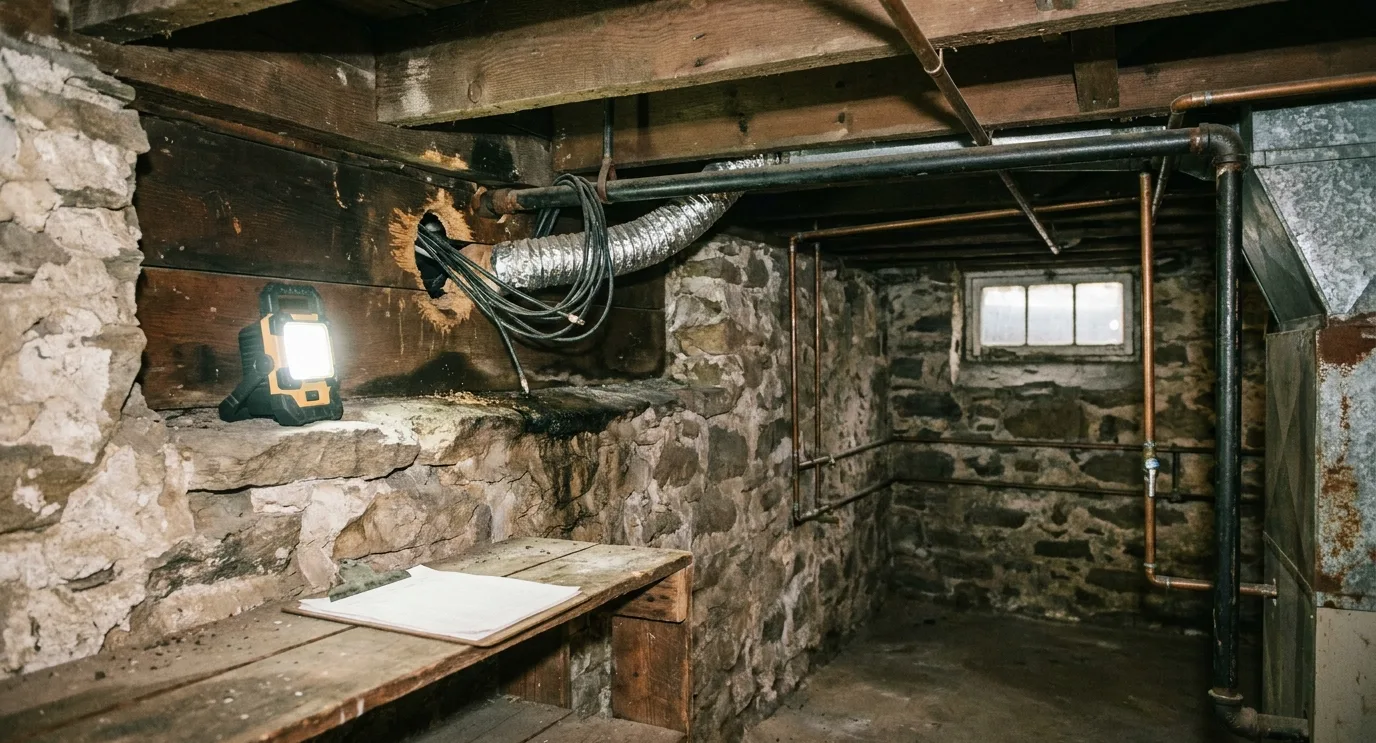
Many older houses here sit on what locals call a Michigan basement: a low, rough cellar dug out under the house, often with fieldstone or rubble walls and sometimes a dirt or patched floor. They leak air and they leak mice. Mortar crumbles, stones shift, and the joint between the foundation and the wood framing above it is rarely tight.
These basements are not hopeless. They just need someone patient enough to go around the entire wall and record every opening, so the sealing that follows is a checklist instead of guesswork.
Crawlspaces bring their own list: vapor barrier pulled loose, vents with no screen, and access hatches that never quite shut.
The evidence we read on the way
Rodents leave a record, and most of it is easy to miss unless you know where to put the flashlight. A good share of an inspection is spent on hands and knees, looking at the base of walls and the tops of foundation ledges.
- Droppings: size and shape tell mouse from rat, and whether they are fresh and soft or old and crumbly tells us how current the problem is.
- Rub marks: gray-black smudges on block, beams and pipe holes where the same bodies pass again and again.
- Gnawing: fresh wood chips and pale chew marks on trim, doors and stored items, compared with old darkened ones.
- Nests: shredded paper, insulation and fabric packed into boxes, wall voids, drawers and behind appliances.
- Tracks and trails: footprints in basement dust, paths through attic insulation, and worn lines in the lawn.
- Smell: a sharp, stale odor tends to pool near active nesting, especially in closed-up spaces.
Buying or selling an older house
A general home inspection may note droppings in passing, but it is not built to trace where rodents get in. If you are buying a house with a stone foundation, a detached garage or a long list of past additions, a rodent-focused walk before closing can turn up repairs worth knowing about, like a crumbling sill, an open lateral cleanout or an attic full of soiled insulation.
Sellers sometimes call us for the opposite reason: to find and fix the obvious openings before the house goes on the market, so a buyer's inspector is not the first one to spot them.
What you get afterward
- A plain explanation of which rodent you have and how active it looks.
- A list of the openings we found, with photos where they help.
- A recommended plan covering trapping, sealing and any cleanup, in the order they should happen.
- Things you can handle yourself, like moving the woodpile or putting pet food in a metal can.
If the signs point to rats, the plan follows our rat control approach. If the insulation upstairs is soiled, attic rodent cleanup gets added. You decide what goes forward and when.
Good times to book one
Right after you find droppings. Before you close on a house. After you have trapped a few mice yourself and they keep coming. And in September, ahead of the October rush, when openings are easy to see and nothing has moved in yet.
A house in Ottawa Hills or any neighborhood full of 1920s homes under big old trees can have openings from the footings to the chimney cap, and it pays to see them all on one visit. The same goes for the big houses in Heritage Hill, where porches, additions and old coal chutes can each hide an opening of their own.
We do rodents and nothing else, so there is no pitch for other pest work. At Grand Rapids Rodent Control, the inspection is simply how we get an honest answer to how they are getting in, and everything after it is built on that answer.
Inspection questions
How long does it take?
Most houses take an hour or two. Bigger homes, ones with crawlspaces, and attics that have to be walked joist by joist take longer.
Do I need to be home?
Yes, or someone who can let us in and answer a few questions about what you have seen and heard. We need the basement, garage and attic hatch reachable, so clear a path to the storage corners if you can.
Should I clean up the droppings before you come?
Please leave them. Their location, age and amount are some of the most useful clues we have. Once we have seen them, we will explain how to clean them up properly or handle it for you.
Can you inspect in winter?
Yes. Tracks in fresh snow show exactly where rodents move along the house, and cold weather is when they are most active indoors, so the evidence is easy to read.
Will you find every hole?
We look hard and recheck on follow-ups, since mice sometimes reveal a new opening once the obvious ones are closed.