Mid-century houses, modern habits
Houses from this era were built simpler than the big Victorian homes closer to downtown, which helps. But they also tend to have additions, finished basements, and garages that were changed over the years. Each change created a seam. In our experience, mice in an Alger Heights home usually come in through a garage, a crawlspace under an addition, or a gap where a newer utility line was run.
We also see more stored items in basements and garages than in older neighborhoods, simply because these houses tend to have more usable storage space. Cardboard boxes and stored pet food give mice places to nest and eat without coming upstairs.
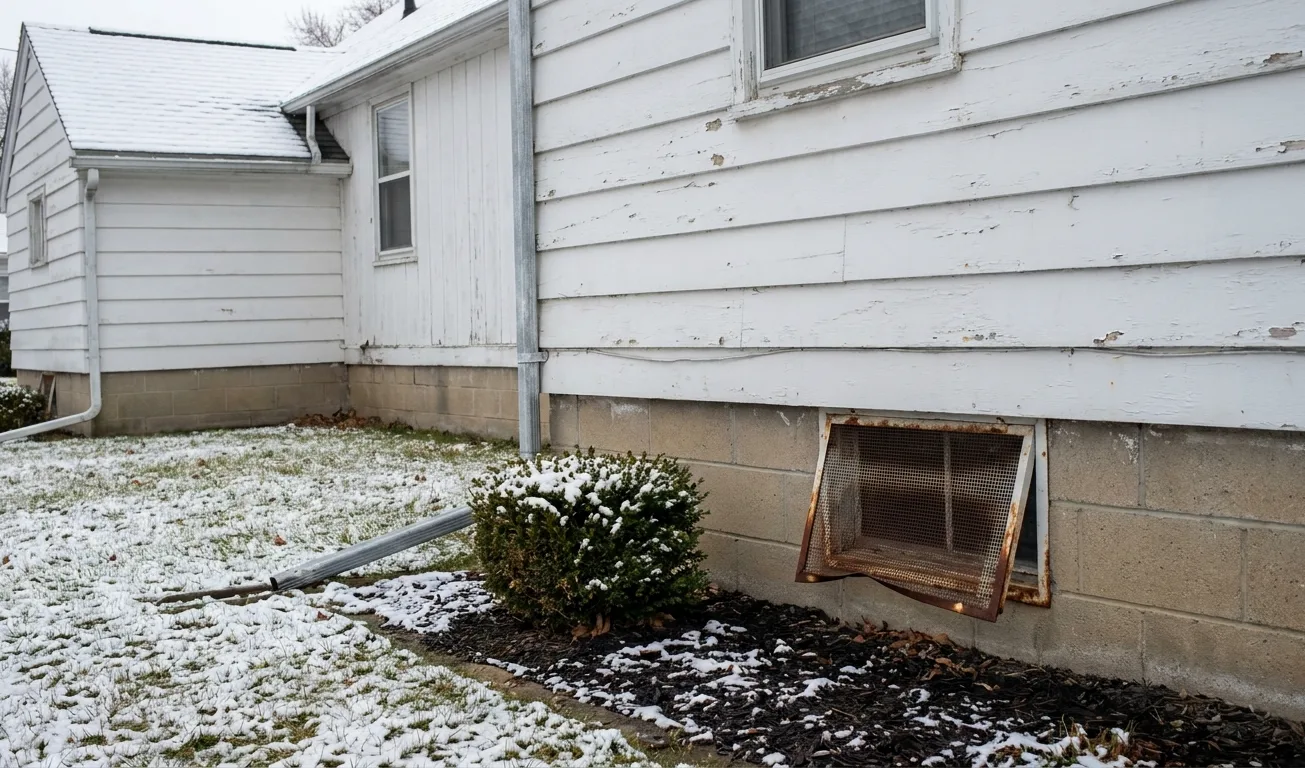
The homes also sit closer to the ground than many older houses. A ranch with a low crawlspace or a Cape Cod with basement windows right at grade puts the entry points within easy reach of a mouse running along the flower bed. Mulch piled high against the siding makes that even easier, so we often suggest pulling it back a few inches.
Basement finishing is another factor. Many of these houses had their basements turned into family rooms decades ago, with paneling or drywall over the block walls. Mice nest in the gap behind that finish, and it hides the cracks they used to get in. We check the unfinished corners, the utility room and the space under the stairs to find the trail.
The garage is usually the doorway
Attached garages are common here, and the door between the garage and the house is one of the most frequent entry points we find. The bottom seal wears, the threshold gaps, and mice walk right in. Detached garages have their own problems: worn overhead door seals and openings at the base of the walls.
We fit tight door sweeps, replace worn bottom seals and close gaps where the slab meets the wall. Most of these are small fixes with a big payoff.
Garages in this part of town also tend to collect the stuff that mice like most: a second fridge with crumbs underneath, bags of salt and sand, grass seed, a stack of patio cushions. The motor housing under an old refrigerator stays warm all winter. We have pulled more than one nest out from under an appliance that nobody had moved in years.
Cape Cod knee walls and crawlspaces
Cape Cods have a half-story upstairs with knee walls along the eaves. The triangle space behind those walls is often lightly insulated and rarely opened. Mice love it. If you hear scratching along the sloped ceiling of an upstairs bedroom, that space is the first place we check. Grand Rapids Rodent Control sees this pattern often enough that we bring knee pads.
Crawlspaces under additions or sunrooms are the other hidden spot. Dirt floors and loose vent screens give mice an easy path into the floor system. When nesting has soiled insulation in either spot, our attic cleanup work can remove and replace it after the animals are gone.
What happens on a typical visit
Outside walk-around
Foundation, garage, vents, utility lines and any addition seams.
Inside check
Basement, garage, crawl access, knee walls and the attic hatch if there is one.
Trapping
Snap traps in covered stations, placed along the runs we find. See our trapping page for more.
Sealing
Steel mesh, metal flashing and cement-based patching where rodents have been getting in.
Follow-up
Trap checks until activity stops, then a final look to confirm.
Around the Alger and Eastern shops
The small business district where Alger Street meets Eastern Avenue gives the neighborhood a walkable center, with cafes, a market and places to eat. Homes on the blocks right behind it sometimes see a little more rat activity in summer, simply because any food business generates trash and deliveries. It is usually manageable with good lids, tight garage doors and a quick look at the alley side of your lot.
Further from the shops, the houses here tend to deal with mice far more than rats. Most of our calls in this part of the south side arrive between October and February, and a well-sealed ranch or Cape Cod usually stays quiet once the work is done. A short fall check each year is often all it needs after that.
If your house backs onto one of the busier streets, mention it when you call. Traffic, plowed snow and commercial trash pickup all shape where rodents travel, and it helps us plan where to look first.
Alger Heights rodent questions
Why do I only hear mice upstairs?
In Cape Cods, mice often nest behind the knee walls on the second floor. They may come up from the basement or garage through wall cavities.
Can you seal my attached garage?
Yes. Garage-to-house doors, overhead door seals and slab gaps are some of the most common fixes we do in this neighborhood.
Do you use poison inside the house?
We rely on traps indoors. Poison can cause animals to die inside walls, which creates odor problems.
Do you work on businesses along Alger Street?
Yes. Shops and restaurants can find details on our commercial page.