Rodent control built around a business
A commercial account is not a house call that happens to be bigger. Doors open all day, deliveries come in on pallets and cardboard, trash piles up out back, and the staff changes every shift. Rodent control in that setting has to be a program: stations placed and mapped, visits on a fixed schedule, and records anyone can pick up and read.
Rats and mice are the only thing we handle. No insect program bolted on, no bundle to upsell. Just rodents, done thoroughly.
That focus means the person servicing your stations knows how a rat behaves around a loading dock, where mice hide in a dry storage room, and what a fresh rub mark on a cinder block wall looks like compared with an old one.
Who we work with
Restaurants and bars
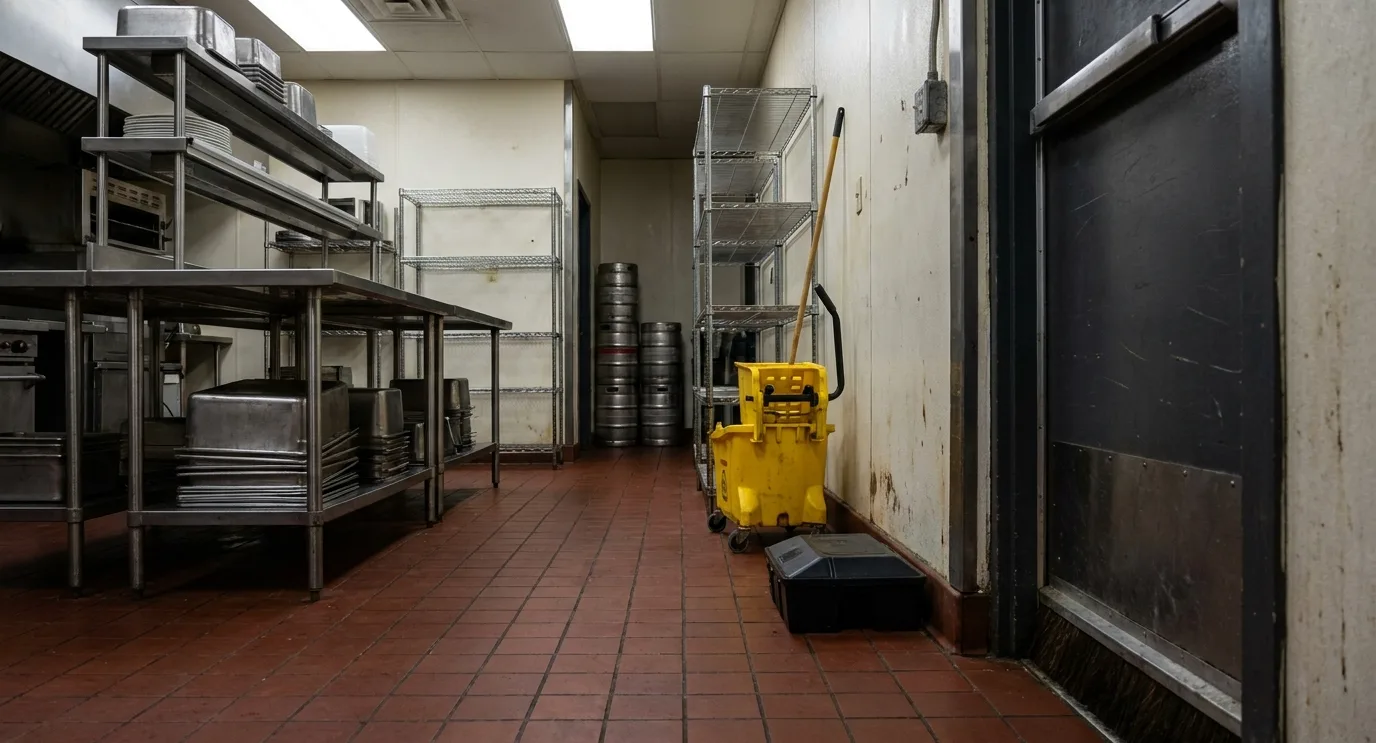
Kitchens along Wealthy Street, Cherry Street and the business districts in Eastown and East Hills share alleys, dumpster corrals and old buildings with common walls. A spotless kitchen can still get mice from next door. We focus on back doors, grease and trash areas, dry storage and the basement, which is often the forgotten part of an older restaurant building.
Breweries and taprooms
Grand Rapids picked up the Beer City USA nickname from online polls in the early 2010s, and there is no shortage of breweries to back it up. Grain is the draw. Sacks of malt, spent grain waiting for pickup and the dock where it all comes in pull in mice and rats. We concentrate on storage, sealing and exterior stations along the building.
Food warehouses and distribution
Pallets, stretch wrap and dock doors that stay up during loading. We map stations along the inside perimeter, keep them off the racking, and check dock seals and leveler pits. Incoming loads get a look too, since mice sometimes arrive inside pallets of dry goods rather than through a wall. Staff who receive deliveries learn what droppings and gnawed packaging look like so they can flag a bad shipment at the door.
Apartment buildings
Mice travel through shared walls, pipe chases and trash rooms. We work building-wide with management, because treating one unit at a time rarely ends it, and we keep notes by unit so the next complaint can be traced. Tenants get a short note on what to expect and how to report activity, which makes follow-up far easier for the property manager.
What the program includes
- A site map showing every station and trap, numbered, so staff or an inspector can find any of them.
- A service logbook kept on site with dates, findings, catches and work done at each visit.
- Exterior bait stations that are locked and anchored, placed where they fit and well away from food prep.
- Traps, not bait, for every interior space.
- Exclusion work on doors, walls and utility penetrations, written up so you know what was sealed.
- Practical notes for staff, like keeping dock doors down and getting dry stock up off the floor.
Ready when an inspector walks in
Food businesses get inspected, and droppings in the wrong corner are exactly the kind of thing that ends up in a report. We cannot promise how any inspection will go. What we can do is keep your log current, your stations mapped and serviced, and any activity written down along with what was done about it. A tidy logbook says a lot about how seriously a business takes rodents.
Staff matter here as much as stations. The people who close the kitchen at night and open the dock in the morning are the ones who see droppings first. We encourage managers to have a simple way for staff to flag sightings, a page in the logbook or a note to the manager, so we hear about a problem on our next visit or sooner, not weeks later. A sighting written down with a time and a place is something we can act on right away.
With an inspection coming and no clear sense of where you stand, ask for a walkthrough beforehand. It runs much like a rodent inspection on a house, with a commercial eye on docks, drains and storage.
Old buildings, new businesses
A lot of the city's restaurants, shops and taprooms operate inside buildings that are a century old or more, some of them former factories and warehouses from the Furniture City era. They have character, and they also have stone and brick foundations, old freight openings bricked in badly, abandoned utility chases and basements nobody has looked at closely in years.
Rodents love that kind of building. Mice move between tenants through gaps in party walls and above drop ceilings, and rats come up from below along old drain lines. Fixing one tenant space while the basement stays open buys a few weeks at most, so we try to get the building owner involved early and work on shared areas as well as your own.
How the first month usually goes
Walkthrough
We tour the whole site with a manager, inside and out, including basement, storage, docks and the dumpster area.
Layout
Stations and traps go in, each numbered and marked on a map that stays in the logbook.
Close the obvious gaps
Door sweeps, dock seals and the worst wall penetrations get handled early, because they matter most.
Tighten the schedule
Visits are more frequent at the start while activity is high, then settle into the regular calendar once catches fall off.
Rats around the dumpster
Plenty of commercial rat trouble starts out back. Dumpsters with broken lids or the drain plug missing, grease bins, pallets leaned against the wall, and a gap under the back door are where rats set up. Fixing it takes traps and stations, plus a conversation with whoever hauls your waste. Our rat control page explains how Norway rats use burrows and alleys.
Visits get scheduled around your hours: before opening, after close, or between loads on the dock. Call Grand Rapids Rodent Control at (616) 441-5601 and we will set up a first walkthrough at a time that does not get in the way of service.
Commercial questions
How often do you service a commercial account?
It depends on the business. Food handlers usually want monthly visits or more. Apartment buildings may be quarterly with calls as needed.
Do you use bait inside a restaurant?
No. Inside, we trap. Bait goes outside only, in locked stations.
Can you come after hours?
Yes. Early morning and late evening visits are routine for kitchens.
Can you handle a single building with several businesses?
Yes. Shared buildings go smoothest when the owner sets up one program for common areas and each tenant joins in, and we keep the records separate for each space.
Do we get copies of the records?
Yes. Every visit is logged on site, and we can send copies of the log and the station map.