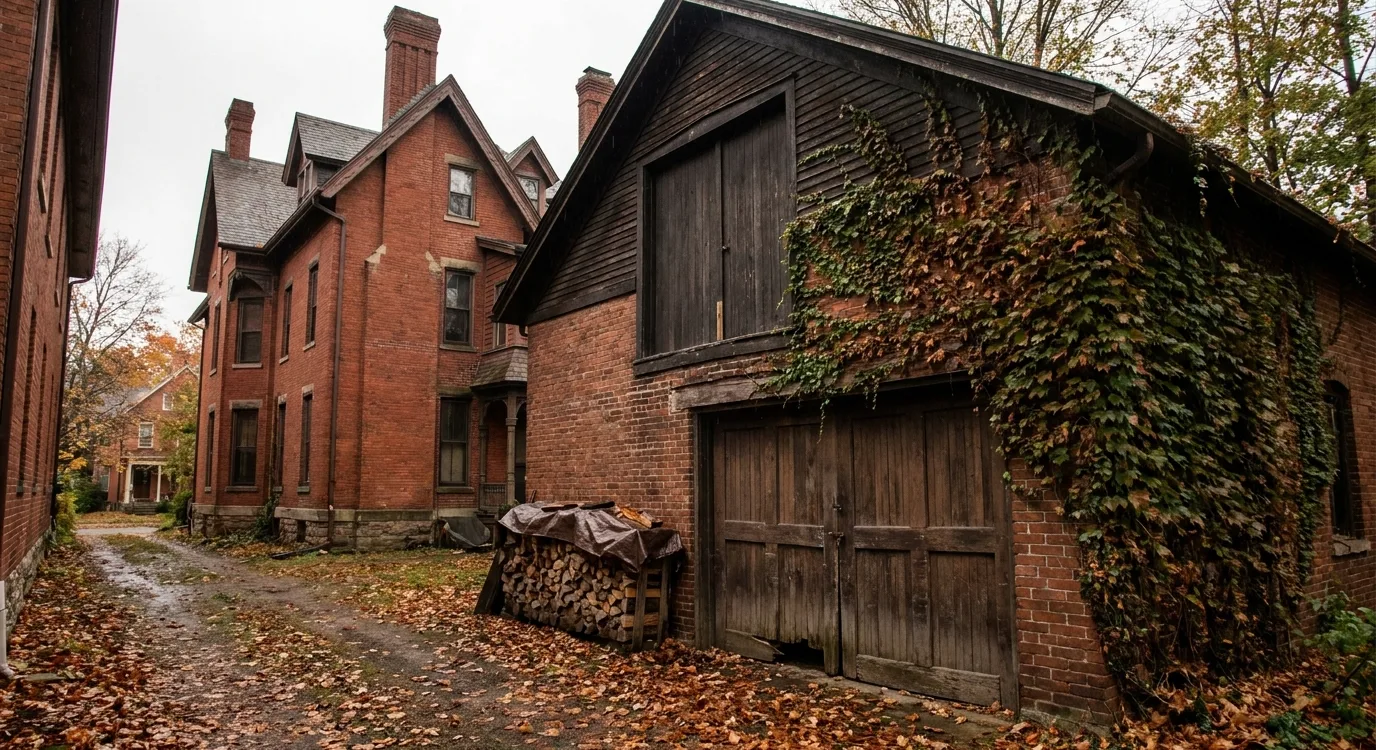
A big old house has a lot of doors you never see
Most of the homes in this historic district went up between the late 1800s and the 1920s. They were built well, but they were built before anyone thought about sealing a house tight. Fieldstone and rubble foundations shift and shed mortar over the decades. Balloon-framed walls run as open channels from the basement sill all the way to the attic, so a mouse that slips in beside a gas line in the cellar can turn up behind a bedroom wall on the second floor the same night.
That is why a Heritage Hill call rarely ends with a few traps in the kitchen. The noise you hear is usually a long way from the hole that let it in, and finding that hole is most of the job.
It also explains why the same house can have mice in three rooms at once. Every bay, every chimney and every built-in cabinet adds framing pockets, and a busy colony will spread through all of them before anyone upstairs hears a thing.
Where we look first on a Heritage Hill house
The cellar and its stone walls
We go along the sill plate with a light and a mirror, checking every pipe and wire penetration, old coal chute openings and the spots where a later owner poured a little concrete over crumbling stone. Gaps the width of a pencil are enough for a house mouse. Old cistern rooms and bricked-up doorways under front steps get a close look too.
Porches, bays and additions
Wraparound porches and bay windows often sit on their own shallow footings. Where they meet the main house there is nearly always a seam, and Norway rats like to burrow in the dry soil under porch decks.
Carriage houses and back garages
Many lots still have an outbuilding off the alley. Stored furniture, bags of birdseed and garden gear make them comfortable winter quarters, and from there it is a short trip across the yard to the main house.
Third-floor attics
Big attics with knee walls and old insulation can hide nesting for years. When droppings and shredded batts have built up, we point owners to our attic rodent cleanup work after the animals are gone.
What owners here usually notice first
People rarely call us after seeing a mouse in the open. On the hill, the first clues tend to be quieter and stranger, partly because the houses are so big that a small colony can go a long time unnoticed.
- A faint pattering inside a pocket door frame or behind a built-in bookcase
- Droppings on the shelf of a butler's pantry or along a back staircase
- Shredded paper or fabric tucked into a radiator cover
- A stale, musky smell in a closet that shares a wall with the chimney
- Gnawed corners on boxes stored in the cellar or the carriage house loft
Any one of those is worth a call. Two or more usually means animals are nesting somewhere inside the walls, not just passing through.
Repairs that respect original materials
Exterior changes in a local historic district may need the city's approval before work starts, and plenty of owners here care about original trim, slate and brick whether a rule applies or not. Our rodent exclusion on these houses leans on methods that are small, tidy and easy to undo: copper mesh packed into gaps and finished with mortar tinted to match, hardware cloth set behind existing vent grilles instead of replacing them, and sheet metal kept out of sight under the edge of a porch skirt.
At Grand Rapids Rodent Control we would rather spend an extra hour shaping a patch than leave a shiny repair on a 120-year-old facade. If a gap is big enough that it really needs a mason or carpenter, we tell you that plainly and explain what the patch has to stop.
How the seasons play out on the hill
Mice start pushing indoors once nights get cold, usually from about October. The mature maples and oaks on these streets drop a thick leaf layer that insulates burrows along foundations, and lake-effect snow piles against basement windows for weeks. In spring the pattern shifts: rats that wintered under porches start moving, and we see more burrows by garden beds and alley fences.
Late winter has its own quirk. Old boiler rooms and radiator lines keep parts of these basements warm right through February, and mice that found that warmth in November have no reason to leave. A house that was quiet in the fall can suddenly get noisy in March, when a second generation of young mice starts exploring the walls.
Either way, the work starts with a full rodent inspection, then trapping inside, then sealing. Doing it in that order keeps animals from being shut in behind your plaster.
Heritage Hill rodent questions
Will sealing work change how my historic house looks?
It should not. We match mortar color, keep metal hidden where we can and work behind original vents and trim instead of replacing them. If a fix would be visible from the street, we talk it through with you first.
Why do I hear mice upstairs but never see them in the kitchen?
Balloon framing lets mice climb inside the walls from the basement to the upper floors without ever crossing a room. The sound upstairs often traces back to an opening down at the foundation.
Do you check the carriage house too?
Yes. Outbuildings are part of every inspection on a lot that has one, since they often hold the colony that keeps resupplying the main house.
How long does a job on a large old home take?
Expect a few visits spread over a couple of weeks: the inspection and setup, trap checks, then sealing once activity drops. Bigger houses with several additions can take a little longer.